
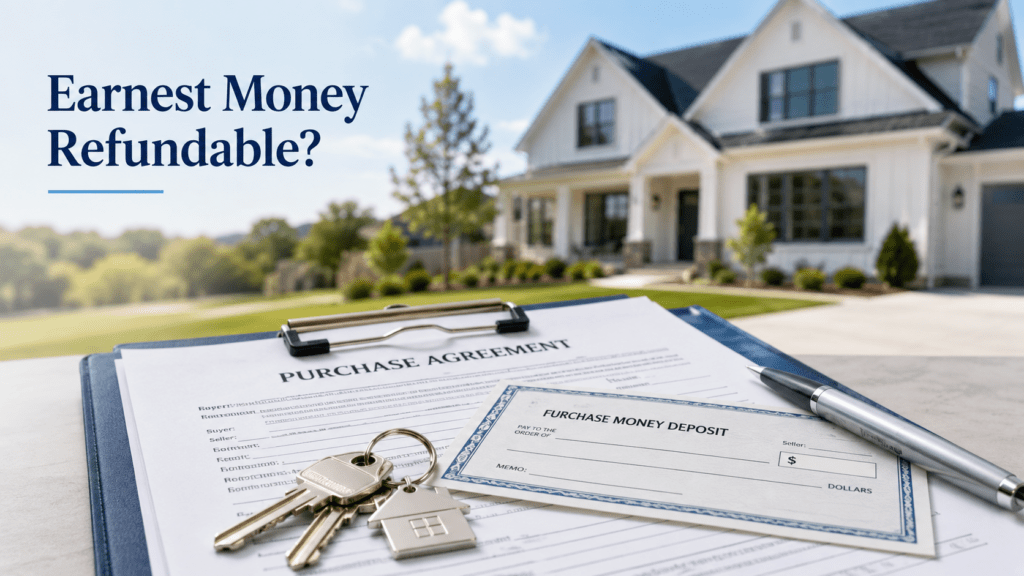
Buying a home often comes with a lot of new terms, and one of the most common is earnest money. Many buyers hear this phrase after making an offer and immediately ask, “Is earnest money refundable?” The simple answer is: yes, earnest money can be refundable, but only under certain conditions written in the purchase contract. The CFPB explains that earnest money is a good-faith deposit paid by a buyer under a signed home purchase agreement, and it may be returned if the contract is ended for a permitted reason.
What Is Earnest Money?
Earnest money is a deposit a buyer gives after a seller accepts their offer. It shows the seller that the buyer is serious about purchasing the property. In simple words, it is like saying, “I am committed to buying this home, and I am willing to put money down to prove it.” This money is usually not paid directly to the seller. It is commonly held in an escrow account by a title company, real estate brokerage, attorney, or another neutral third party. NAR notes that escrow helps protect both sides because neither the buyer nor the seller can freely access the funds while the transaction is moving forward. If the sale closes successfully, the earnest money usually goes toward the buyer’s down payment or closing costs. For example, if you put down $5,000 in earnest money and later close on the home, that $5,000 may be credited toward the amount you already owe at closing.
Is Earnest Money Refundable?
Earnest money is refundable when the buyer cancels the contract for a reason allowed in the purchase agreement. These allowed reasons are often called contingencies. A contingency is a condition that must be met for the sale to continue. For example, a buyer may include an inspection contingency. This means the buyer can inspect the home and cancel the deal if serious problems are found. If the contract gives the buyer this right and the buyer follows the deadline, the earnest money is usually refundable. However, earnest money is not automatically refundable in every situation. If a buyer simply changes their mind after all protections have expired, the seller may have the right to keep the deposit.
When Can a Buyer Get Earnest Money Back?
A buyer may usually get their earnest money back in several common situations. The rest is when the home inspection reveals major issues. For example, suppose a buyer offers to purchase a house for $350,000. During the inspection, the inspector and foundation damage, roof leaks, or serious electrical problems. If the buyer has an inspection contingency and cancels within the allowed time, the earnest money is usually returned. The second situation is when financing falls through. Many buyers depend on a mortgage to buy a home. If the lender denies the loan and the contract includes a financing contingency, the buyer may be able to cancel and receive the earnest money back. The third situation is when the appraisal comes in too low. For example, a buyer agrees to pay $400,000, but the lender’s appraisal says the home is worth only $370,000. If the buyer has an appraisal contingency, they may be able to walk
away and recover the deposit. The fourth situation is when there is a title problem. A title issue means there may be a legal problem with ownership of the property. Examples include unpaid liens, ownership disputes, or errors in public records. If the seller cannot provide a clear title, the buyer may have the right to cancel and receive the deposit back. The fifth situation is when the seller fails to meet their obligations. For example, if the seller refuses to complete agreed-upon repairs, cannot close on time, or backs out without a legal reason, the buyer may be entitled to the return of earnest money.
When Can the Seller Keep Earnest Money?
A seller may be able to keep earnest money when the buyer breaks the contract without a valid reason. This is why buyers should never treat earnest money as risk-free For example, imagine a buyer makes an offer, removes all contingencies, and then decides they prefer another home. If there is no contract protection left, the buyer may lose the earnest money. From the seller’s point of view, the home was taken off the market, other buyers may have moved on, and the seller may have lost time and money. Another example is missing important deadlines. Real estate contracts often have strict dates for inspections, loan approval, appraisal review, and closing. If the buyer misses a deadline and then tries to cancel, the seller may argue that the deposit should not be returned. A buyer may also lose earnest money by failing to close after being fully approved for financing. If the buyer has no valid reason and simply refuses to complete the purchase, the seller may claim the deposit as compensation.
Why Contract Contingencies Matter
Contingencies are the main protection for buyers. They explain when a buyer can cancel the deal and still receive the earnest money back. Without contingencies, the buyer may have fewer ways to recover the deposit.Common contingencies include inspection, financing, appraisal, title, and home sale contingencies. A home sale contingency means the buyer’s purchase depends on selling their current home first. This can be helpful for buyers who cannot afford two homes at once. However, sellers often prefer offers with fewer contingencies because they want a smoother and more certain closing. In a competitive market, some buyers may remove contingencies to make their offer stronger. This can help win the home, but it also increases the risk of losing earnest money. If you want to know more about contingencies, we have a complete guide for you.
How Much Earnest Money Do Buyers Usually Pay?
Earnest money amounts vary by location, price range, and market conditions. In many US real estate markets, buyers price or a fixed amount. may offer a percentage of the purchase For example, on a $300,000 home, a buyer might offer $3,000 to $9,000, depending on local expectations. In a slower market, a smaller deposit may be acceptable. In a competitive market, a larger deposit may make the offer look stronger. Still, buyers should not offer more earnest money than they can afford to risk. A high deposit can impress a seller, but it can also create financial stress if the deal goes wrong.
What Happens to Earnest Money at Closing?
If everything goes smoothly and the home purchase closes, the earnest money does not disappear. It is usually credited toward the buyer’s closing costs or down payment. For example, suppose your total cash needed at closing is $25,000, and you have already paid $5,000 in earnest money. That $5,000 may reduce the amount you need to bring at closing to $20,000, depending on the final settlement statement. This is one reason earnest money should not be seen as an extra fee. It is usually part of the money you are already paying to buy the home.
What If Buyer and Seller Disagree?
Sometimes, the buyer and seller do not agree about who should get the earnest money. In that case, the escrow holder usually cannot simply choose a side. The funds may remain in escrow until both parties sign a release or until the issue is resolved through legal procedures. For example, the buyer may say they cancelled because of inspection problems, while the seller may argue the buyer missed the deadline. In this situation, the Final Answer: Is Earnest Money Refundable? Earnest money is refundable when the buyer cancels for a reason allowed by the purchase agreement and follows the required deadlines. It is usually not refundable when the buyer backs out without a valid contract reason. For buyers, the key is to understand your contingencies and act on time. For sellers, the key is to understand when the buyer is protected and when the deposit may be at risk. Before signing any real estate contract, buyers and sellers should work with a qualified real estate professional and, when needed, a real estate attorney. Rules can vary by state and contract type, so professional guidance matters. Ready to buy or sell a home with more confidence? Click here to connect with a trusted local real estate expert and get guidance for your next move.
1. The simple answer is: yes, earnest money can be refundable, but only under certain conditions written in the purchase contract.
2. The CFPB explains that earnest money is a good-faith deposit paid by a buyer under a signed home purchase agreement, and it may be returned if the contract is ended for a permitted reason.